Site-specific, spatial installation
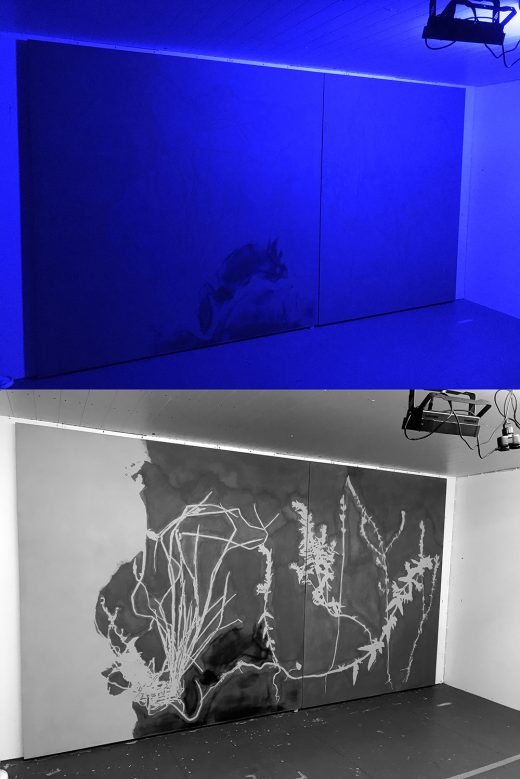
Painting with firewood ash, earth pigment and cellulose on canvas, programmed LED light, multichannel sound. 2,4 m x 22,9 m (size variable)
MUU Helsinki /Lux Helsinki, Finland, 2025
XXVIII Mänttä Art Festival, Mänttä, Finland, 2024
Gallery Nitra, Nitra, Slovakia, 2023–24
Kulturhus Björkboda, Kemiönsaari, Finland, 2023 (with the installation Garden of Death – Kimitoö Islands)
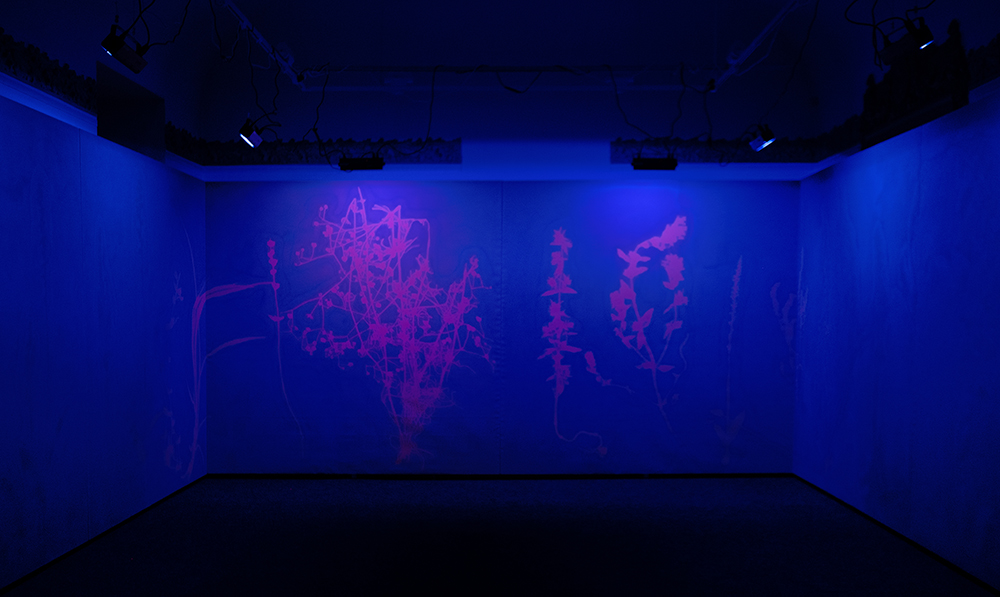
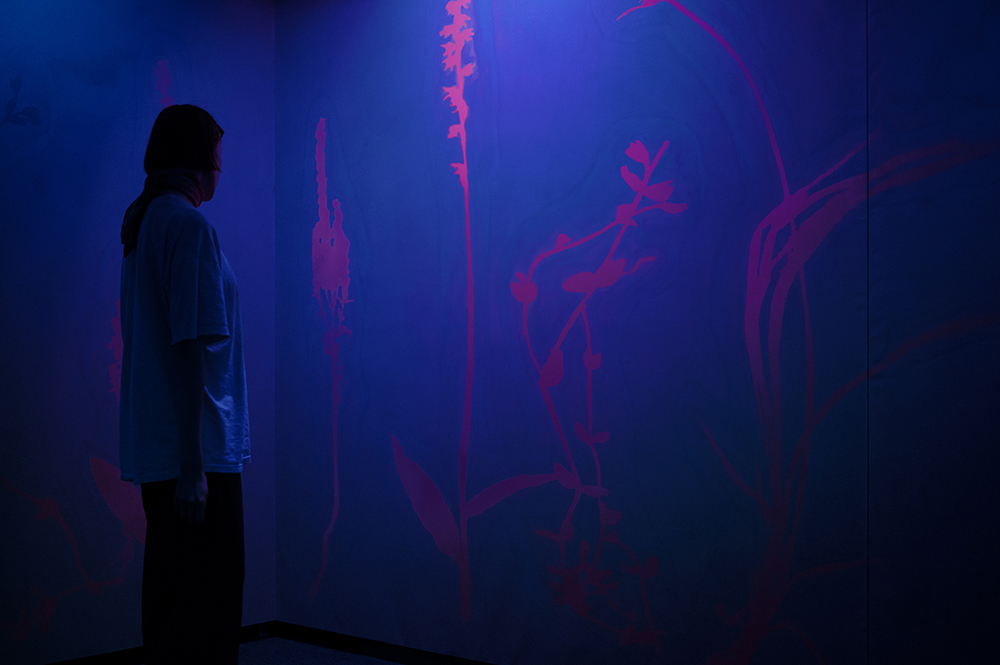
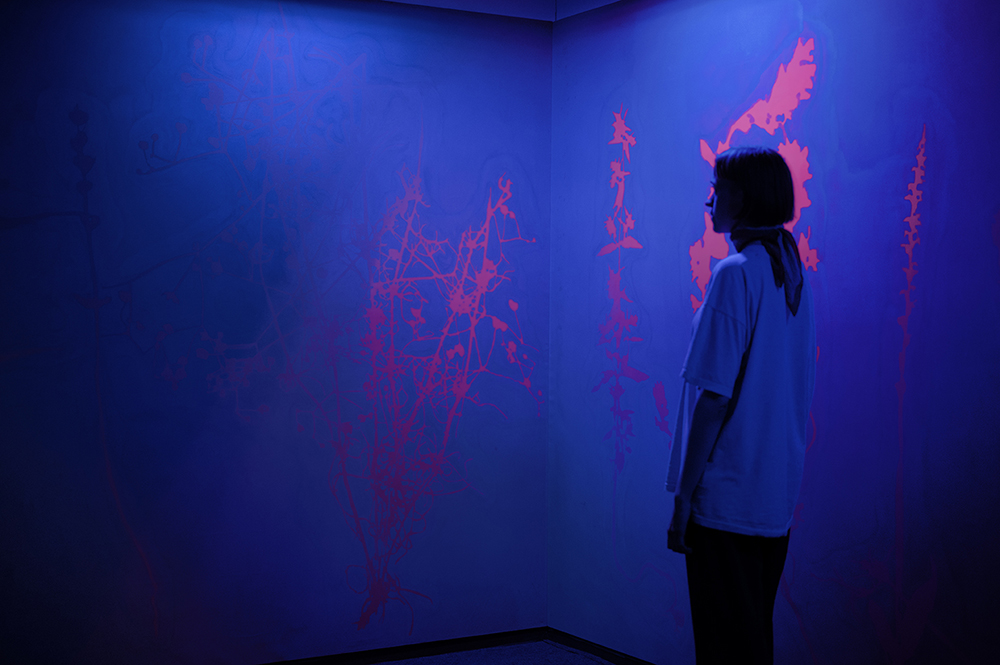
In Michal Czinege’s Garden of Death, bursts of skeletal silhouettes of plants pulsate at sporadic intervals and locations on large canvases. They are painted with ash from trees that heated a house over one winter. The installation borrows visual elements from herbaria of extinct and endangered plants in the Finnish region of North Karelia.
Referring to Hugo Simberg’s 19th century painting of the same name, the garden of death is an otherworldly place. Simberg portrays souls as plants that Death cares for, and the intermediate space of Death as an otherworldly place where souls go before entering heaven. Czinege’s installation is a strange space where something of the skeletal plants’ fragile presence remains flickering as inexplicable traces in time until they, too, cease to exist. The flashes are perhaps an after-pulse, or a memory of a lost existence. Despite the powerful charge, they are now but unembodied bursts, variations in light’s wavelength and perceptual ephemera in the viewer’s mind.
Garden of Death was initially created for the exhibition space at Nitra Gallery in Slovakia, as part of the group exhibition “Forest Line”. The capability to modify dimensions and architectural design of this installation allows the exhibition space to significantly influence the visual and emotional aspects of the individual exhibition. The Garden of Death was first presented to the Finnish audience at the Mänttä Art Festival during the summer of 2024. An earlier version (Garden of Death, Kimitoön Islands) was exhibited at Kulturhus Björkboda in 2023.
At MUU Helsinki Contemporary Art Centre, the installation was accompanied by a multichannel soundscape constructed and remixed from recordings that capture the cracking sounds of dying plants. The ultrasonic sounds were originally detected and recorded by researchers in a recent study (credit: Khait et al. -2023) of plants responding to stressors such as dehydration. While the frequency of these sounds is too high for human ears, insects and other mammals can likely detect them.
Material choices of the installation are part of Michal Czinege’s research as an artist into plant-based, non-toxic materials. The installation is painted using wood ash as pigment.
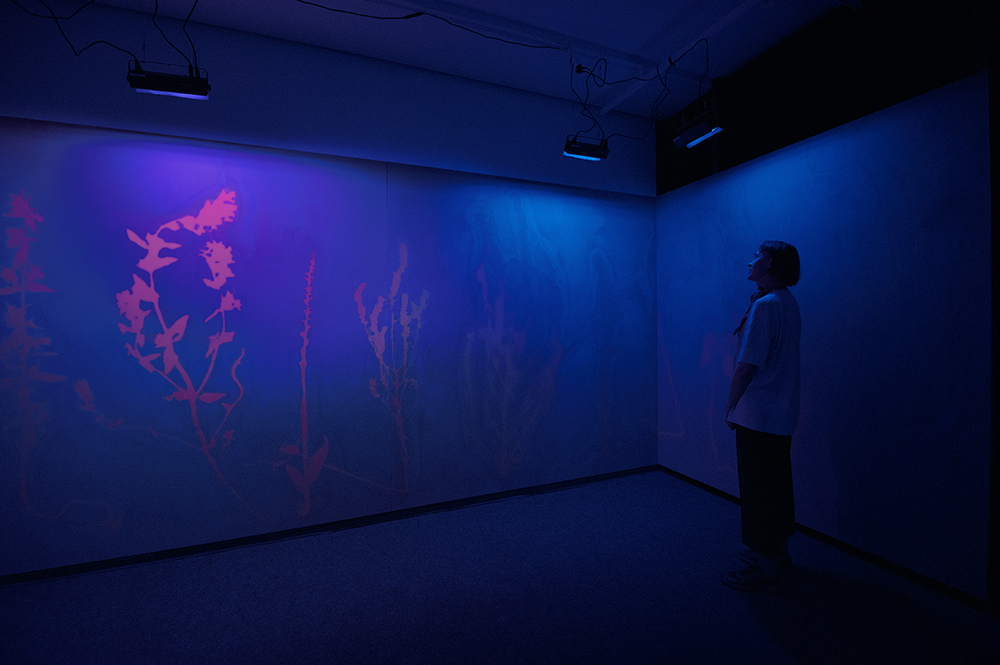
MUU Helsinki /Lux Helsinki, Finland, 2025